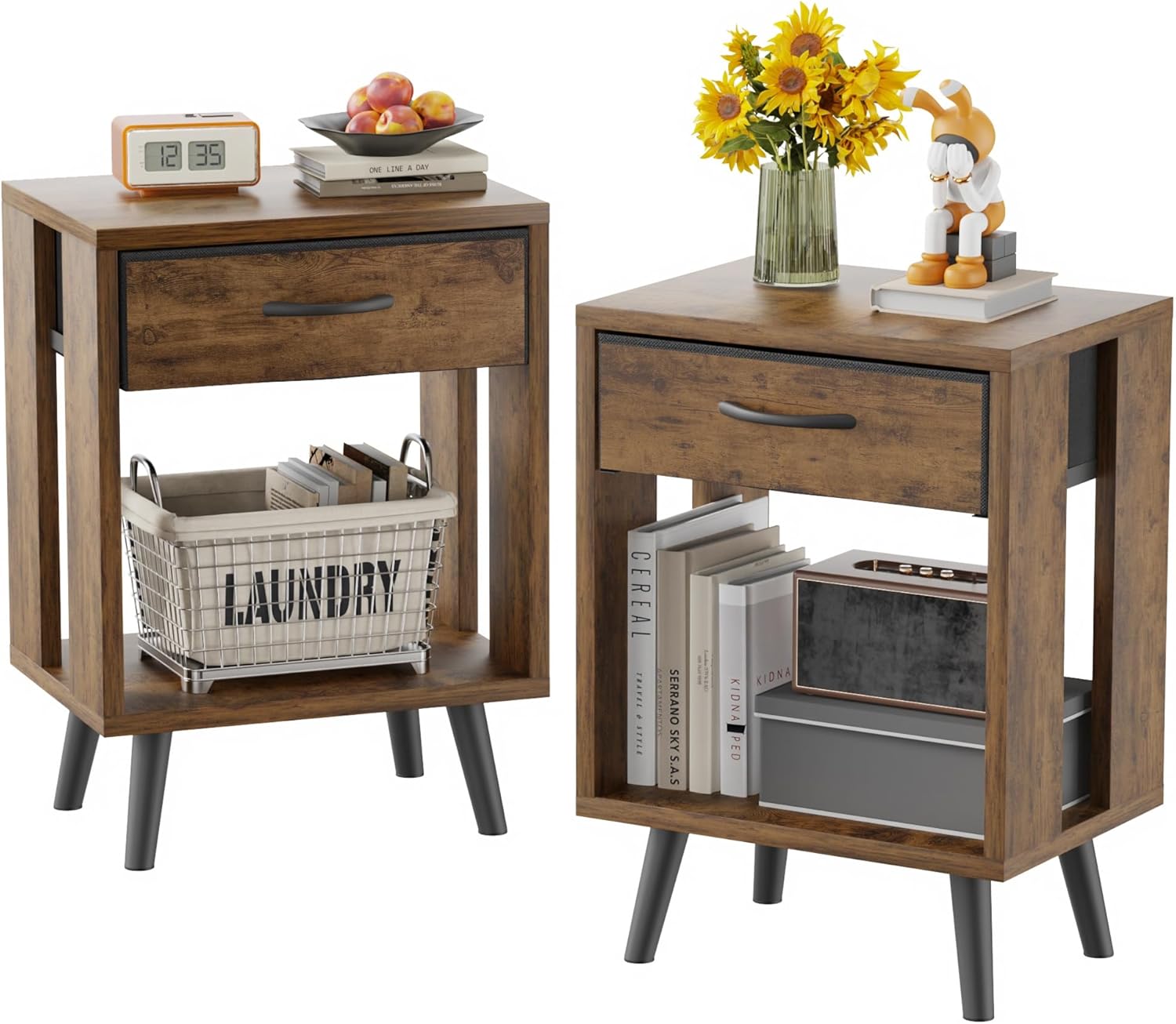
Start With the Lamp and Charger Footprints, Not the Nightstand
The lamp and the charger decide the layout, so measure both before comparing nightstand dimensions. Note the lamp base diameter, the widest point of the shade, and where its switch sits, because a base-mounted switch is easier to reach from bed than one on the cord.
List every charging item that stays on the table overnight and treat each as its own footprint. A single cable is not the same as a dock, a stand or a multi-device charger, and stacking them usually means one gets moved aside each night.
Test the pair with paper circles or painter's tape on a surface at the same height as your bedside table. Live with that outline for a few evenings before deciding the top is large enough.
Check the Outlet, Plug Shape and Cable Path First
The outlet position decides whether the nightstand can sit flush against the wall. A plug that projects straight back may hold the table away from the wall, while a flat or angled plug changes the geometry; only the plug you actually own matters here.
Trace the real path the cord takes from the device to the socket rather than the straight-line distance. If that path crosses where you step out of bed or where a drawer slides, move the charger instead of the furniture.
Ask whether the model has any cable opening. This listing describes fabric drawers and open shelves but no cable management feature, so plan the route as if the nightstand has no built-in opening.
Confirm the Top and Shelf Figures the Listing Does Not Give
The listing states the night stand measures 15.7 inches long, 11.8 inches wide and 23.6 inches high, but it does not give a separate top-surface dimension, the clear height of the open shelf, or a load limit for the top, shelves or drawers.
Ask the seller for the top surface size, the distance from floor to top, the clear opening of each shelf, drawer interior dimensions, any stated weight limits and care instructions. Until those arrive, plan using the overall footprint as the maximum possible top.
Decide What Belongs on the Top, the Shelf and the Drawers
Items you reach for while lying in bed belong on the top: the lamp, glasses, a glass of water and the phone you check before sleep. Devices that stay plugged in and undisturbed can sit on the open shelf, which keeps the top clearer.
Reserve the drawers for what you want out of sight and only need weekly, because anything moved to a closed drawer means opening it every night. The listing does not state what the fabric drawers will support, so confirm heavier items with the seller before relying on them.
Test the Arrangement Before Adding Clips or Fixings
Set the lamp and charger in place and use them for several nights before buying organisers. Note how often you move things aside, whether the cable stays put, and whether the lamp shade blocks the phone screen or a clock.
Do not drill into the nightstand to add a cable hole or screw a clip to it, because the listing does not establish the materials or construction. Removable adhesive clips on the wall, or the existing gap behind the table, keep the cable tidy without altering an unverified surface, and loose cables should stay clear of walking routes.
Plan Each Side of the Bed as a Separate Setup
Sockets are rarely symmetrical, so the second bedside table often sits further from an outlet or beside a door. Because this product is sold as a set of two, check the second side independently rather than assuming the layout you designed for the first will transfer.
If one side has no convenient outlet, decide whether a longer cable route or a battery-powered lamp is the better answer there, and confirm cord lengths before buying anything. The listing describes no built-in power or lighting, so each side needs its own plan.
Explore related furniture
Who this helps
A reader with limited space on each side of the bed has one lamp they use every night and one or two devices they charge overnight, and is looking at the GYIIYUO nightstand set of 2 with fabric drawers and open shelves in dark rustic brown.
How to make the choice
Keep the lamp on the top and move the charger to the open shelf when the top cannot hold both footprints with room to spare. Keep both on the top only when the two footprints and the cable leave a stable, clear area, and treat the seller-confirmed top dimension as the deciding figure rather than the overall height.
Information behind this guide
The 15.7 in by 11.8 in by 23.6 in figures, the fabric drawers and the open shelves come from the product listing and are treated as listing information, not independently verified measurements. The listing gives no top-surface dimension, shelf clear height, load limit, cable opening or care instructions, so those stay unknown until the seller confirms them.
Compare your options
| Option | Consider when | Limitation | What to verify |
|---|---|---|---|
| Lamp on the nightstand top | A lamp whose base and shade leave enough of the top for the charger you use every night. | The top is shared, so a wide base can crowd a dock or a second device. | Compare the lamp base footprint with the top dimension the seller confirms, and check reach from the mattress. |
| Charger on the open shelf | Setups where the top must stay clear and the shelf is easy to reach while seated or lying down. | The listing gives no clear shelf height or load limit, so a tall lamp or heavy device may not suit the shelf. | Request shelf height, depth and any stated load information before placing anything there. |
| Wall or headboard-mounted light | Small tables where the top cannot hold a lamp and a charger at the same time. | It requires permission to fix to the wall plus a separate wiring or battery decision. | Confirm the fixing suits your wall type and have any new electrical work assessed by a qualified person. |
Your decision checklist
- Measure the lamp base diameter, the widest point of its shade and the footprint of every charger or dock that will sit on the top.
- Find the nearest outlet and check plug direction and cord length against the route the cable will actually take, not the straight-line distance.
- Ask the seller for the top-surface dimensions, open shelf clear height, drawer interior sizes, any stated weight limits and care instructions.
- Tape the footprints onto a surface at the same height and live with the arrangement for a few evenings before buying organisers.
- Keep charging cables out of walking routes, and avoid drilling or screwing into a nightstand whose materials the listing does not state.
Related questions
Can a lamp and a phone charger share a small nightstand top?
They can share it if both footprints plus the cable fit the actual top surface with enough room to move the lamp and pick up the phone. The listing gives overall dimensions only, so ask the seller for the top surface measurement and any stated load information. If space is tight, the open shelf is a reasonable place for a charger that stays plugged in, provided you can still reach it without moving other items.
Where should a charging cable run if the outlet hides behind the nightstand?
Run it along the wall or through the gap behind the nightstand, keeping it out of the route you use to get out of bed and away from points where a drawer or a foot could pinch it. Check cord length and plug shape first, because a plug that projects straight back can hold the table away from the wall. The listing does not describe any cable opening, so do not assume one exists.
Do fabric drawers change what you can store in a nightstand?
The listing describes fabric drawers and open shelves but gives no load limit, lining detail or cleaning instructions, so it does not establish what the drawers will carry or how they should be cared for. Use the drawers for what you want out of sight at night, and wait for seller confirmation before relying on them for heavier items. Open shelves keep frequently used items visible.