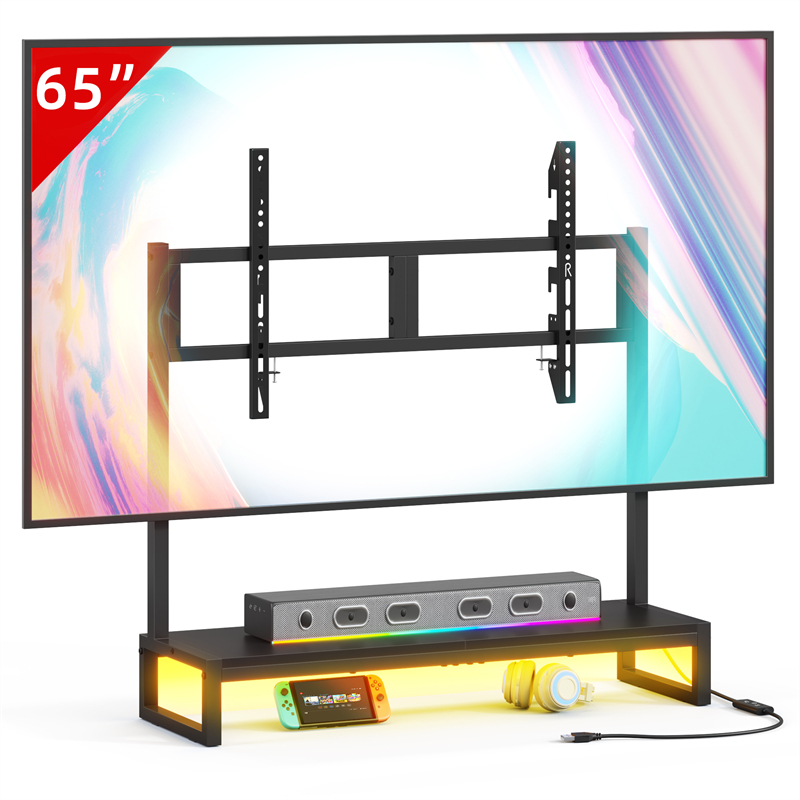
The TVS027 Listing Establishes Only the Model and Product Type
The TVS027 catalogue entry confirms a model name and the product type, tabletop TV stand. It does not give a supported television weight, load rating, mounting pattern, top or base dimensions, material, assembly steps or stability requirements. That gap matters because a stand is a support product: the television's weight and footprint must be matched to documented figures, not inferred from a photograph or a screen-size label. Silence in the listing is not approval. Until the seller supplies a figure for the exact version, treat that point as unconfirmed.
Load and Mounting Answers Are Stop-Level Questions
Load and mounting are the first stop-level questions. Ask what television weight the stand is designed to support, with a value and unit, and how the television is held: on its own feet, on a bracket, or both. A screen-size range does not answer this because two televisions with the same diagonal can differ in weight and base spread. A phrase such as 'fits most TVs' is also not an answer. If the seller cannot give a load figure or describe the mounting arrangement for the TVS027, stop the purchase rather than estimating the stand's capacity yourself.
Top and Base Dimensions Decide Whether the Television Physically Sits
Usable top and base dimensions are the second blocker. A tabletop stand can still have a top that is too shallow for a particular television foot, or too small for the bracket pattern you need. Measure the television's base spread and depth, or its bracket hole spacing, then ask for the corresponding TVS027 figure. An overall width alone does not confirm usable depth. If the television's footprint is well inside the dimensions the seller has already supplied, you can pause for one missing secondary figure; if the footprint is near or beyond what is known, stop until the match is confirmed.
Assembly, Stability and Anchoring Instructions Are Not Cosmetic
Assembly and stability details are purchase questions, not afterthoughts. Ask what assembly is required, which tools and fixings are included, and whether the maker specifies anchoring to the wall, a television strap or another stability measure. The answer tells you whether the stand suits your floor, wall and willingness to fix anything. 'Easy assembly' is not the same as a parts list or step sequence. If those details are unavailable before purchase, stop; do not improvise a support method. Where anchoring is specified, have a qualified person assess the wall and follow the maker's instructions.
Cosmetic Questions Can Wait Until the Support Facts Are Clear
Finish name, exact colour match, visible cable appearance and how the stand looks beside other furniture are cosmetic questions. They affect satisfaction, but they cannot make an underspecified support product suitable. A Tiger Wood colour designation is not evidence of solid wood or any other material, and a photograph cannot confirm sheen or grain. Once load, dimensions and stability are answered, ask for a sample or close-up images, care instructions and the return terms if colour is critical. Keep those questions separate so a friendly answer about finish is not mistaken for confirmation of support.
Write One Numbered Message and Ask for Values With Units
Send one numbered message rather than an open question. Include the television model, its maker-stated weight, its base or bracket footprint and the surface the stand will sit on. Ask for the supported weight or load limit; the usable top width and depth plus any mounting pattern; the assembly steps and stability requirements; and the package contents. Request values with units and confirmation that the answer applies to the TVS027 version you are buying, not a different model or colour variant. Use the site's contact route and keep the written reply with your order records so the specification you relied on can be traced.
How to Read a Partial or Evasive Reply
Partial replies are common. Treat 'standard', 'universal', 'strong enough', 'no need to worry' and similar wording as non-answers. A design description is not a load rating, and a screen-size recommendation is not a weight limit. Test each stop-level group against what a usable answer looks like: a number with a unit for load, a described mounting method, and assembly or stability guidance for the exact model. If two of those groups remain open, do not order. If only one secondary dimension or cosmetic point is missing, you can decide whether waiting is worthwhile.
When the Better Decision Is a Different Stand, Not More Questions
If clear questions about load, mounting and stability still produce no documentation, the practical alternative is a stand whose listing or seller response supplies those facts before purchase. A different TV stand type, or a wall-mounted solution assessed by a qualified installer, may suit the room better than an unconfirmed tabletop stand. That is not a claim that another GYIIYUO model is suitable; each model needs the same evidence. Changing the product can cost time and alter the layout, but it avoids building a television setup on an unknown support rating.
What to Confirm on the Cabinet or Surface Under the Stand
The stand is one part of the support chain. Check the furniture or floor it will sit on: the surface should be flat and able to take the combined weight, and the stand should not overhang an edge where it could be knocked. Ask the seller whether the TVS027 needs a particular surface or fixing, and check the supporting furniture's own load guidance. If the cabinet's load limit is unknown, that is a separate open question, not something the TV stand resolves. The television maker's installation requirements still apply.
Explore related furniture
Who this helps
You have shortlisted the TVS027 tabletop TV stand, but the listing names only the model and product type. You need to know whether a missing load figure, base dimension or assembly detail is a reason to walk away or a question you can settle after delivery.
How to make the choice
Proceed only when the seller supplies a supported television weight or load limit and a mounting description for the exact TVS027 version, along with dimensions that match your television's footprint. Pause when only a secondary dimension is missing and your television is already inside the known dimensions. Stop when load, mounting or stability answers are absent or vague; cosmetic details can wait, but support facts cannot.
Information behind this guide
The supplied TVS027 listing confirms only the model name and the product type, tabletop TV stand. It does not give a load rating, supported weight, mounting pattern, dimensions, material, assembly steps or anchoring requirements. The question order and decision rules here are general buying guidance; they are not verified specifications or installation instructions for the TVS027.
Compare your options
| Option | Consider when | Limitation | What to verify |
|---|---|---|---|
| Stop: load or mounting unanswered | Buyers who cannot get a supported television weight, load limit or mounting description for the exact TVS027 version. | A screen-size range or 'fits most TVs' does not confirm weight or footprint compatibility. | Ask for a load value with unit and a description of whether the television rests on its feet, a bracket or both. |
| Pause: only a secondary dimension is missing | Buyers whose television footprint is already inside the dimensions the seller has supplied and who are waiting on one remaining figure. | A pause is not approval; the stand remains unconfirmed until the missing figure arrives in writing. | Request the usable top depth, base spread or bracket pattern, whichever affects your television. |
| Proceed: cosmetic details only | Buyers who have written load, mounting and stability answers and are deciding on colour, finish appearance or cable tidiness. | Colour names and photographs do not establish material, sheen or an exact match with existing furniture. | Ask for a sample or close-up images, care instructions and the return terms if colour is critical. |
Your decision checklist
- Ask for a supported television weight or load limit with a unit and the mounting method for the exact TVS027 version; a screen-size range is not an answer.
- Request the usable top width and depth and any bracket pattern, then compare them with your television's base or bracket, not its diagonal.
- Ask what assembly is required, which fixings are included and whether the maker specifies wall anchoring or another stability measure.
- Send your television model, its maker-stated weight and its base footprint in one numbered message so the reply can be checked against real figures.
- Save the written reply and treat vague words such as universal, standard or strong enough as unanswered questions.
Related questions
Is a screen-size range enough to confirm the TVS027 will support my television?
No. Screen size is a diagonal measurement and does not give the television's weight, base spread or mounting pattern. Ask the seller for a supported weight or load limit with a unit and a description of the mounting arrangement for the exact TVS027 version. If the reply only gives a screen-size range, the support question remains unanswered.
Can I order the TVS027 first and confirm assembly and stability later?
Only if you accept that the purchase is unconfirmed and can return it unused. Assembly steps, included fixings and any maker-specified stability measure affect whether the stand suits your room, so they belong before purchase. 'Easy assembly' is not a substitute for the actual steps or parts list. If those details are missing, pause or choose a stand that documents them.
What should I do if the seller answers colour questions but not load questions?
Treat the colour answer as cosmetic and the load question as still open. Reply with a shorter numbered request limited to the supported weight or load limit, the mounting method and the stability requirements. If the seller still does not provide them for the exact model, do not order. A prompt answer about finish does not confirm that the stand can support your television.