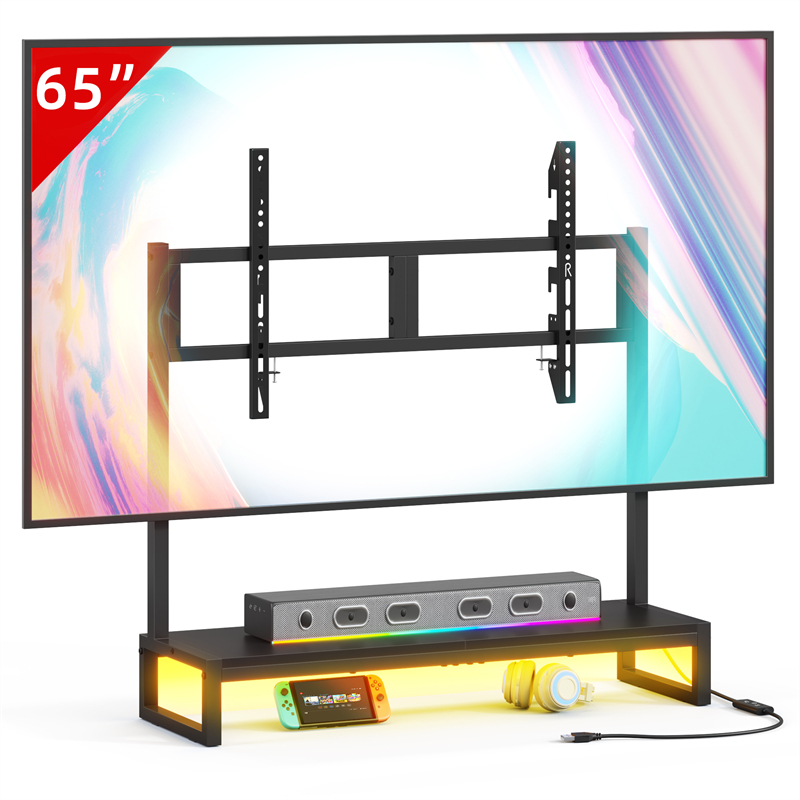
The Replacement Base Must Be Approved for the Exact Television
The replacement base or feet must be approved by the television maker for your exact model before the TVS027 stand enters the decision. A part that screws in or looks similar is not evidence of approval, and a tabletop-stand listing cannot confirm a television part. Ask the television maker for the approved part and its fitting instructions, then keep those details with the television records.
Approval is more specific than a parts listing that says the base fits a screen-size range. Replacement parts can change the fixing screws, the shape of the contact area and the way the panel is supported. For this decision, the practical rule is simple: no drilling, no improvised base and no adapter unless the television maker explicitly approves it for that model. If the only available part is described as universal or requires modification, treat compatibility as unresolved.
Recheck Footprint and Balance, Not Just the Screen Diagonal
The new support footprint needs its own check because replacing feet or a base can change where the television touches the stand, even when the screen diagonal stays the same. Record the width and depth between the outermost contact points, the shape of each foot or base plate, and whether the television still sits over the middle of that footprint. Compare those notes with the original approved base.
A smaller or offset footprint can concentrate load or shift balance, so do not rely on the stand's appearance. Make a tape outline of the new footprint on the intended top surface as a planning check, then compare it with the stand seller's usable top dimensions. The outline shows whether every contact point can sit on the stand; it does not confirm the stand's load rating or stability.
Get Load and Mounting Confirmation From the Stand Seller
The TVS027's load and mounting details are unconfirmed in the supplied listing, so they must come from the seller before you treat the stand as compatible. The entry names the model and describes a tabletop TV stand; it does not state a maximum television weight, usable top dimensions, a bracket pattern or any restriction on replacement feet.
When you ask, describe both the television and the replacement base rather than quoting screen size alone. Request the usable top dimensions, load rating, fixing method and any restriction on the television's feet or base. If the seller cannot identify the mounting interface, the TVS027 remains a mismatch for a television whose original support has changed.
Use Fasteners and Stability Checks as Stop Signals
Fasteners and stability become stop signals after a base change because the replacement part can alter how the television sits and how its fixings load. Follow the television maker's instructions for the exact replacement and confirm that every specified fastener is present and seated. Do not substitute longer or shorter screws unless the television maker lists them for that model; an incorrect length can damage the television or leave the base loose.
Stop and reassess if the television rocks, one foot carries visibly more load, the panel leans, or any part of the base overhangs the stand top. Do not correct those symptoms with folded paper, drilled holes or an improvised bracket. A brief wobble-free check is not a substitute for the seller's load and mounting confirmation.
Decide Between the TVS027, an Approved Base or a Different Stand
Use the TVS027 only when both sides of the evidence line up: the television maker approves the replacement base, and the stand seller confirms the load, top dimensions and mounting arrangement. If either confirmation is missing, restore the television's original approved base or choose a different stand whose seller documents support for the new footprint. Restoring the original base is the cleanest alternative because it returns the television to a configuration the maker intended.
If you keep the TVS027 on the shortlist, ask the seller whether the stand is designed for a television resting on its own feet, a bracket or another fixing method, and compare that answer with the television manual. When the answers conflict, do not force the pairing. The right next step is a written question to both parties, not another accessory.
Explore related furniture
Who this helps
You have replaced, lost or damaged a television's feet or pedestal base and want to keep using the set on a tabletop stand, perhaps the TVS027, without assuming the new support arrangement is compatible.
How to make the choice
Use the replacement base or feet only when the television maker identifies them for that exact model and the stand seller confirms the supported load, top dimensions and mounting arrangement. If either confirmation is missing, keep the television off the stand and restore the original approved base or choose a stand documented for the replacement footprint. Appearance and a brief wobble-free check do not replace those confirmations.
Information behind this guide
The TVS027 entry confirms only the model name and tabletop TV stand type. It does not give a load rating, top dimensions, mounting pattern or replacement-base compatibility, and catalogue text is not independent testing. The checks here are general guidance; confirm the television manual and current stand details with the seller.
Your decision checklist
- Get written confirmation from the television maker that the replacement base or feet are approved for your exact model; do not accept a similar-looking part as compatible.
- Note the new footprint, contact points and any change in weight or balance, then compare them with the stand seller's load and top dimensions.
- Ask the stand seller to confirm the fixing method and whether a television with replacement feet or base is supported; the TVS027 listing does not supply this.
- Check every fastener against the television maker's instructions and stop if the part needs drilling, adapters or modification of the stand.
- Before regular use, confirm the television sits without rocking, all feet or base contacts are fully on the stand, and ports and cables remain reachable.
Related questions
Can a universal replacement base work with the TVS027 stand?
Only if the television maker confirms that the base is approved for your exact television and the stand seller confirms that the TVS027 supports the resulting footprint, weight and mounting arrangement. Universal describes the part's marketing, not verified compatibility with either the television or the stand. Without both confirmations, keep the TV off the stand and use the original approved base or ask the seller for a documented alternative.
Does a replacement base change what the stand must support?
It may. Even when the television's weight is unchanged, a different base can alter the contact area, the distance between support points and the balance of the screen. Ask the television maker for the replacement part's details and compare them with the stand seller's documented load and top dimensions. Do not infer the result from the old feet or from a photograph.
What should I do if the TV rocks after changing its base?
Stop using the setup and check that the replacement base or feet are the approved parts and that every fastener follows the television maker's instructions. If the television still rocks, does not sit fully on the stand, or you cannot confirm the stand's load and mounting details, do not add shims, drill new holes or improvise a bracket. Contact the television maker or stand seller for a documented solution.