Sort the Collection by Retrieval, Not by Format
Organising game and film cases around a tabletop TV stand starts with how often each title leaves the shelf, not whether it is a game or a film. Put the titles you reach for weekly into one group, the ones you choose occasionally into a second, and the ones you keep for completeness or seasonal use into a third. Within each group, use the order you naturally browse by, such as series, genre or player count, because an alphabetical system that ignores how people choose a title can slow down the cases you use most.
The condition is that the grouping has to match your household's actual habit. If two people share the collection and one plays nightly while the other watches a film once a month, give the nightly user the nearest zone and move the monthly titles farther away. The trade-off is that a single alphabetical run looks tidier but may put the most-used cases at the least convenient end. Write the three groups down before buying dividers or boxes, so storage follows use rather than an assumed collection size.
Measure the Cases Before the Furniture
Measure a representative stack of game and film cases, including any slipcase, steelbook or booklet, before comparing it with a shelf or drawer. Record the height, width and depth of the stack plus the space your fingers need to pull one case out. Do not rely on a nominal case size or on the furniture's exterior dimensions; a cabinet that looks deep enough can still have a shallow interior or a door that reduces the clear opening.
Use the same tape to measure the clear opening, the interior depth and the distance the drawer or door travels. Then test with a rigid box or a stack of cases in the actual position. The condition for a workable zone is that a case can be removed and returned without tipping the stack or catching on the shelf above. If the measured depth is greater than the cases, plan a front-facing box or divider so cases do not migrate to the back.
Keep the Tabletop Stand Out of the Media Plan
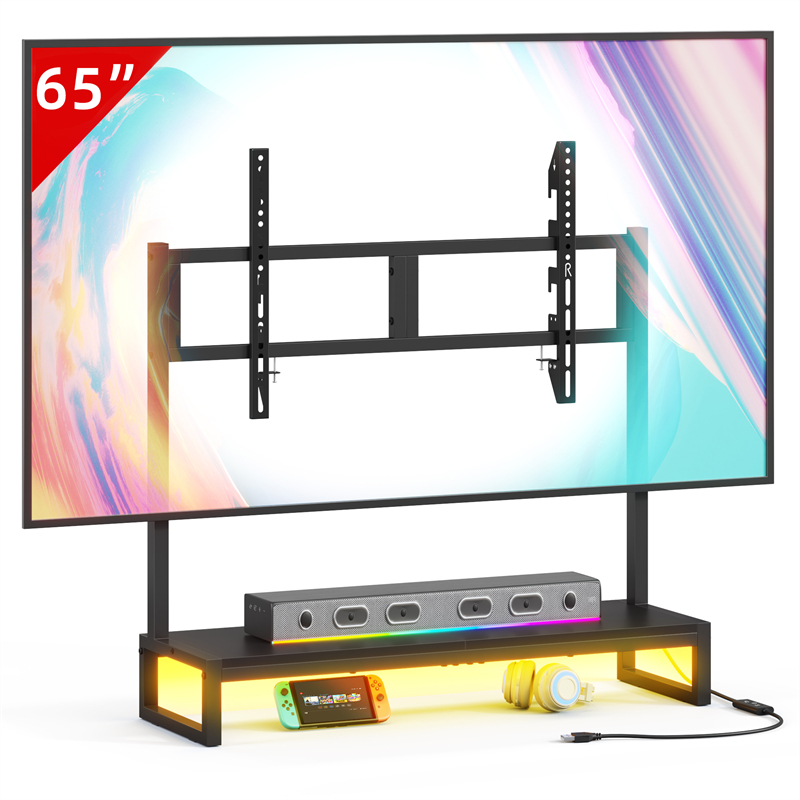
The TVS027 is listed as a tabletop TV stand, and the catalogue entry confirms only the model and that product type. It does not confirm shelf dimensions, compartments, a load rating or a surface intended for media storage. Treat its top and base as part of the television setup, not as an overflow shelf, until the seller supplies those details.
If the TVS027 sits on a separate cabinet or console, organise the cases in that furniture and keep the stand's footprint clear. If there is no other furniture, choose a lidded box or a portable case that sits beside the setup rather than stacking cases on the stand. Check that any box or case does not block the television base, the controls you use or the space needed to reach the back of the equipment. The trade-off is a less integrated look in exchange for not asking an unconfirmed surface to carry a new job.
Assign the Three Groups to Reach Zones
Give the weekly group the easiest reach from where you sit, usually a shallow shelf or a drawer that opens fully without moving the television. Give occasional titles the next zone, such as a lower shelf or a closed cupboard, and put archive titles in labelled boxes that can live farther away or in another room. The condition is that you can retrieve a weekly case without standing up, leaning across the screen or moving the stand.
Reach matters more than the number of shelves. A deep, low cupboard can hold a large archive but is poor for nightly use if you have to kneel and pull boxes out. Conversely, prime open space is wasted on titles you open twice a year. If the furniture has only one usable shelf, reserve it for the weekly group and use a portable box for the rest rather than mixing all three groups at the same depth.
Make Deep Storage Pullable and Visible
Spine-out storage works only when the cases sit near the front edge of the shelf and have enough finger space to be pulled. Place dividers or labelled boxes at the front of deep shelves so the cases you want are not hidden behind a second row. Do not overfill a drawer: a compressed row makes individual cases hard to remove and can put strain on the drawer, especially if the furniture's load guidance is unknown.
The condition is that the storage is stable and the furniture is used as intended. Confirm the weight and anchoring advice for the cabinet or console that holds the media, particularly if children or tall stacks are involved. A portable box should have a lid that stays closed and a label on the end you see. The trade-off is that visible spine labels make a collection look busier than closed boxes, but they also cut the time spent searching.
Use a One-In, One-Out Routine to Stop the Pile
Keep a small return tray or a single open spot for cases in use, and return each case to its group when you finish. Once a month, check whether the weekly group still matches what you actually play or watch, and move dormant titles to the occasional or archive box. The condition for the routine is that the return spot is closer than the floor beside the stand; if it is not, the pile will rebuild there.
A one-in, one-out rule is optional, but it helps when the furniture has no confirmed expansion space. If a new title arrives and no measured slot exists, remove a dormant title to the archive box before adding the new case. The trade-off is a little more handling at the start, in exchange for not turning the top of the TV furniture into an unmeasured stack. Review the case count against the measured opening rather than against the furniture's overall size.
Explore related furniture
Who this helps
A household has a TVS027 tabletop TV stand on a cabinet or console and a growing stack of game and film cases, but the listing gives no shelf, compartment or load details for the stand.
How to make the choice
Choose spine-out open storage for weekly titles only when the measured case depth and pull-out space fit; use closed drawers or labelled boxes for occasional and archive cases, accepting less visibility for less clutter. Keep the TVS027's top and base clear unless the seller confirms its dimensions, load rating and intended use.
Information behind this guide
The TVS027 entry confirms the model and tabletop TV stand type only. Case sizes come from the reader's own measurements, and storage capacity, load limits and compartment details remain unconfirmed. The organisation advice is editorial guidance, not tested performance.
Compare your options
| Option | Consider when | Limitation | What to verify |
|---|---|---|---|
| Open shelf below the screen | Weekly rotation cases you want visible and easy to grab, if the measured case depth and pull-out clearance fit the shelf. | Dust and visible clutter; cases can crowd the stand base or cable area if the shelf is not deep enough. | Measure case depth plus finger space and keep the storage outside the TVS027 footprint. |
| Closed drawer or cupboard | Occasional titles you want out of sight, where the drawer opens fully and you can label the cases clearly. | Deep drawers can hide cases and allow stacks to slide; full extension may be needed to reach the back. | Measure interior depth, drawer travel and clear height, and confirm the furniture's load guidance. |
| Portable case or lidded box | Archive titles or a rotating selection you move between rooms, especially when the TV furniture has no confirmed media storage. | Needs floor or shelf space elsewhere and can become a pile if it is not labelled and returned to a fixed spot. | Measure its footprint and keep it out of walking routes and away from the television base. |
Your decision checklist
- Measure a stack of game and film cases with sleeves, then measure the clear opening, interior depth and pull-out space of the shelf or drawer.
- Sort titles into weekly, occasional and archive groups before buying boxes, dividers or extra shelving.
- Keep the TVS027 tabletop stand's top and base clear unless the seller confirms dimensions, load rating and intended use beyond supporting the television.
- Check that a weekly case can be removed and returned without moving the television, leaning across the screen or unplugging equipment.
- Use spine-out labels for active titles and labelled front boxes or dividers in deep storage so cases do not hide behind one another.
- Confirm the load and anchoring guidance for the cabinet or console holding the media, not only for the tabletop stand.
Related questions
Can game and film cases go on top of the TVS027 tabletop stand?
Only if the seller confirms the top's dimensions, load rating and intended use, and the cases leave the television base, controls and cable connections clear. The catalogue entry confirms the model and tabletop stand type, not a media-storage function. Without that confirmation, use a separate shelf, drawer or lidded box; do not treat the stand as a tested media surface.
Should I store cases spine-out or in closed boxes?
Spine-out storage suits the titles you scan and retrieve weekly, because labels stay visible and one case can be removed without lifting a stack. Closed boxes suit occasional or archive titles and rooms where visual clutter matters, but label the end you see and keep a list of what is inside. For deep shelves, a front-facing box can prevent cases from disappearing behind a second row.
What should I measure first: the cases or the furniture opening?
Measure both before choosing a position: a representative stack of cases with sleeves, then the clear opening, interior depth and pull-out space of the shelf or drawer. The cases tell you the minimum size; the furniture tells you whether the group can be reached and returned without tipping or jamming. Exterior dimensions alone are not enough because doors, frames and drawer fronts reduce usable space.