Start With the Access Path, Not the Wall
The question that decides most locking-cabinet layouts is not where the unit looks right, but where you can stand while it is open. A locked cabinet is opened and relocked repeatedly, sometimes several times a day, so it needs more working space in front than a piece you touch once a week. Choose the standing and reaching zone first, then find a wall that accepts it.
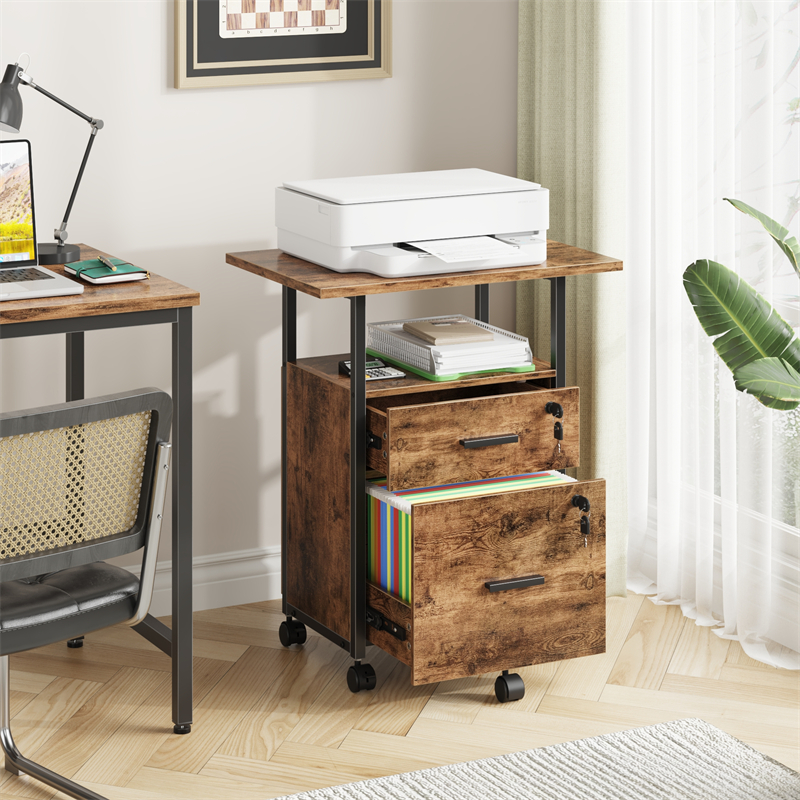
The limitation is information. The supplied catalogue entry for the FC013 Locked Filing Cabinet - Tiger Wood gives the product name, the Tiger Wood finish reference and a set of product images; it does not give dimensions, drawer count, opening depth, lock position or material. Until those appear on the product page, any placement plan is provisional. That single gap matters more than any styling decision.
What the FC013 Locked Filing Cabinet - Tiger Wood Listing Confirms
The catalogue confirms the brand name, the product name, the finish reference in the title, the product slug fc013-locked-filing-cabinet-tiger-wood-10, and the image set. It does not confirm size, drawer configuration, lock coverage, material, weight or assembly.
The title indicates a filing cabinet supplied with a lock, finished in a Tiger Wood colour reference. It does not say what the lock secures, whether the cabinet uses drawers, doors or both, or which face the lock sits on. It also does not identify the material: a colour or grain name is not evidence of solid wood.
Before you plan a room around it, collect five data points from the product specification: overall height, width and depth; the clearance needed to open the drawers or doors fully; the side or face where the lock is fitted; what the lock secures; and the material and finish description. If a figure is missing, ask the seller rather than estimating.
Measure Three Clearances, in This Order
First, the footprint. Measure the width and depth you need, then add whatever side gap the room forces on you, such as a skirting board, a door frame, a radiator or the edge of a desk. In a tight room, note that rear clearance may matter if the wall has a cable run or a socket you use.
Second, the open clearance. Measure the clear depth in front of the candidate spot, then compare it with the drawer-extension or door-swing figure from the specification. Do not assume the gap you have is enough; if the figure is not published, ask for it. A cabinet that fits closed but not open is the most common layout error with filing storage.
Third, the working path. Stand where you would stand, hold a folder at arm's length, and step back. If you have to turn sideways, the spot is a compromise. Check the same path with the unit open: either someone can pass behind you, or you accept that the aisle closes while you work.
Three Placement Patterns and When Each One Fits
Beside a desk, within arm's reach. This fits when you pull records constantly and the floor beside the desk is otherwise empty. It may not fit if the desk chair already fills that zone, or if the open drawer would land in the chair's own clearance.
In an alcove, closet or deep wall recess. This keeps the cabinet out of the room's main sightline and out of a walkway. It may not fit if the recess is shallower than the open-drawer depth, because the wall, not the room, then blocks access.
Against a low-traffic wall away from the desk, used as archive rather than active storage. This suits records you open weekly or monthly. It may not fit your habits if the extra walk to unlock it makes you leave papers out on the desk instead.
Plan Around the Lock, Not Just the Cabinet
The lock belongs in the layout plan. Confirm which face carries it and what it secures, then check that this face is the one you approach. A lock set against a wall, behind a monitor or below the desk edge is awkward to use every day, and an awkward lock tends to stay unlocked.
Decide where the key or code routine lives before the cabinet arrives. Also check whether unlocking briefly blocks a doorway or a shared path. In a shared office or a rented room, the moment of opening should not push you into the traffic lane.
A Clearance and Layout Checklist
Before ordering, confirm these items from the product information: overall height, width and depth; the open-drawer or door-swing clearance; the footprint including any plinth, feet or castors; the side or face where the lock is fitted; what the lock secures; and the material and finish. Add any care or fixing notes shown with the product.
Then mark the footprint on the floor with tape and rehearse the working position: stand inside the marked spot, open a folder at the front edge, and step back. This simple rehearsal catches the wrong spot before delivery, when changing the plan is still easy.
Mistakes That Cost Usable Space
Fitting the closed cabinet and ignoring the open one. The consequence is a unit that sits neatly against the wall but cannot be opened fully, so you work at an angle or leave it partly shut.
Reading the colour name as a material specification. Tiger Wood here is a colour or finish reference in the title; if material matters to you for weight, moisture or wear, confirm it separately from the specification rather than from the name.
Putting the locked cabinet in the busiest lane. The consequence is that every unlock interrupts the room, and the cabinet ends up open or unlocked because closing it costs too much effort.
How to Decide, and What to Do Next
If the open-clearance figure and the lock position are confirmed, and you have a clear standing path, the FC013 Locked Filing Cabinet - Tiger Wood can be planned beside a desk or in a recess. If those figures are unavailable, keep the plan flexible: ask the seller for the specification before you commit the spot, and avoid buying on a guess about depth.
The next step is small and specific: measure the footprint and the open clearance of your two best candidate spots, write both numbers down, and compare them with the product data. If the open clearance fails, move to the second spot, or choose a different cabinet before the room is reorganised around a unit that cannot open.