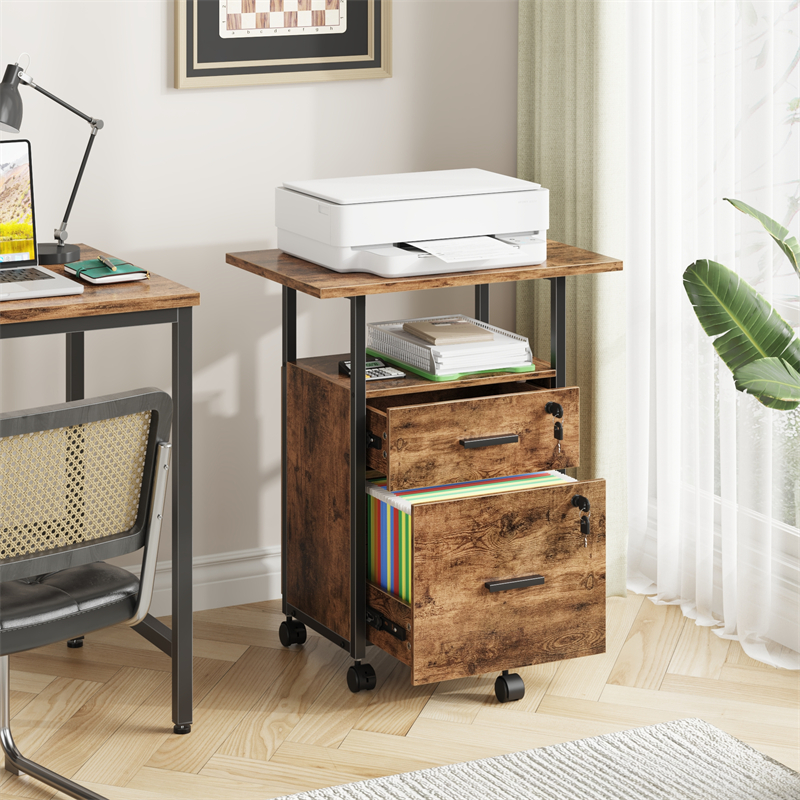
What Has to Match for Hanging Folders to Fit a Drawer
Hanging folders fit a filing cabinet drawer only when three things match: the drawer has a support for the folder's hooks, the folder's hanging width matches the spacing of that support, and the closed drawer has clear height and depth for the folder, its tabs and its contents. A folder can hang correctly and still be a poor fit if the drawer will not close over the tabs or the lock bar catches the top edge. Treat the three checks separately, because passing one does not establish the others.
The support may be factory rails running along the drawer sides, notches or hooks formed into the drawer walls, or a separate rail frame that sits inside the drawer. Which one a cabinet uses matters because each expects a different folder bar design and a different installation. If you cannot yet identify the support, you cannot say whether a hanging folder will stay seated when the drawer is opened.
Measure the Drawer Interior, Not the Cabinet Exterior
Measure the inside of a drawer when checking hanging folder compatibility, because a cabinet's external width includes the case sides, gaps and hardware and says nothing about the space a folder spans or how far it travels. Work inside the drawer with a tape and record the clear width between the support surfaces at the height where the hooks rest, the usable depth from the drawer front to the back, and the interior height from the drawer bottom to the underside of the closed opening.
Add the drawer's open travel, because a deep drawer that opens only part way hides the tabs you need to read. If you are assessing a model before purchase, request these interior figures with units instead of estimating them from photographs. Exterior dimensions do not substitute for them.
Match the Folder's Stated Hanging Width to the Support Spacing
Hanging folders are sold in designated widths tied to paper sizes, and the bar and hooks are positioned to span that width; the drawer supports must sit at a spacing that lets the hooks rest. Use the folder maker's stated hanging width and hook design rather than the paper size name alone, because two products sold for the same paper size can use different bar and hook systems. A folder narrower than the support spacing can drop through, while one wider than the spacing cannot seat at all.
A separate rail frame can adapt a drawer that has no rails or notches, provided its frame fits the drawer's interior width and depth and the drawer closes fully over it. Confirm that the frame is intended for drawer use and that it does not interfere with the runners or the lock. If a frame has to be trimmed or forced into place, it is not the right part for that drawer.
What the FC013 Listing Establishes and What Remains Unknown
The FC013 Locked Filing Cabinet - Tiger Wood listing names the model and a finish; it does not state drawer count, external or interior dimensions, rail or notch support, maximum file size, material, load, or what the lock secures. Hanging folder compatibility for this cabinet is therefore unconfirmed, and the finish name does not establish the drawer's construction or the width of anything inside it.
That matters most before you buy a box of folders or a rail kit, because the return cost falls on you if the folder width or rail system turns out not to match. Ask the seller for the interior figures in writing with units, and keep that reply with your order details so you can compare it with the cabinet when it arrives.
The Questions to Ask Before Buying Folders or a Rail Kit
Ask the seller for the drawer count, the clear interior width and depth of a drawer, and the interior height. Ask whether the drawer sides have rails, notches or neither, and whether a rail kit or hanging frame is included or available. Ask which folder size designation the drawer is intended to hold, and ask for the answer in the same units you measured in.
Then ask about the details that catch people out: how far a loaded drawer extends, whether the lock bar or rod runs where folders will hang, whether full drawers with tabs can close and lock, and whether the runners need any particular care. If the seller cannot give interior figures, ask whether assembly instructions are available for that model. A model number alone is not a measurement.
Test One Folder Before You Load the Drawer
Test a single empty folder in the hanging position before filling a drawer, so a mismatch shows up without a full box of paperwork behind it. Check that both hooks rest evenly on the support, that the folder spans without bowing or dropping, that the drawer closes completely with the tab inside, and that you can read tabs when the drawer is open. Then repeat with representative contents, because weight shifts the bar and changes how the folder sits.
Also check the lock with the drawer loaded and closed, and check that nothing catches on the drawer front or the case as it moves. If the drawer sticks or a hook lifts, stop and ask the seller rather than forcing it, because forcing a drawer can bend the hooks or the support. Once one folder behaves correctly through a full open and close, load the rest the same way.
When Hanging Folders Are the Wrong Fit for a Drawer
If the seller confirms there are no rails or notches and no rail kit fits the drawer interior, hanging folders are the wrong fit for that drawer regardless of the cabinet's overall size. Use upright file holders or document boxes inside the drawer, or move the hanging system to a different drawer that has the right support. The trade-off is retrieval speed, since loose holders are slower to scan than a row of suspended tabs.
The same conclusion applies if the interior height leaves no clearance for tabs and contents, or if the lock bar occupies the hanging line. In those cases, decide which matters more for that drawer, quick scanning or the storage method itself, and put the folders where the support actually exists.
Explore related furniture
FC013 Locked Filing Cabinet - Tiger Wood
Who this helps
A reader with limited floor space is considering the FC013 Locked Filing Cabinet - Tiger Wood for a home office and wants to use hanging folders for active paperwork, but the product page lists only the model and finish, so the drawer interior and any rail support are unknown.
How to make the choice
Proceed with hanging folders in the FC013 only when the seller confirms the drawer count, the clear interior width and depth, and the rail or notch support, and those figures match the folder's stated hanging width with height clearance for tabs. If the support is unconfirmed, use upright file holders or document boxes instead, accepting slower scanning.
Information behind this guide
The FC013 listing supplies only a model name and Tiger Wood finish; drawer count, dimensions, rail compatibility, material, load and what the lock secures are not stated. The measuring and testing steps here are general furniture checks, not independent test results or manufacturer instructions, so treat the seller's written figures as the source for fit.
Your decision checklist
- Measure the clear interior width of the drawer at the point where folder hooks would rest, not the cabinet's external width.
- Measure the drawer's usable interior depth and height, then allow for tab height and contents before checking that the drawer closes fully.
- Ask which folder width or paper-size designation the drawer supports and whether rails, notches or a rail kit are included.
- Compare the folder maker's stated hanging width and hook design with the measured support spacing before buying a box of folders.
- Confirm how far a loaded drawer extends and that you can read tabs without the hooks lifting off the support.
- Test one empty folder, then one with representative contents, for seating, slide, closure and lock-bar clearance before filling the drawer.
Related questions
Can I add hanging folder rails to a drawer that has none?
Sometimes, if a rail kit or hanging frame is designed for drawer use and its frame fits the drawer's measured interior width without fouling the slide or the lock. Ask the cabinet seller whether adding rails is permitted for that model and whether a kit is offered, then check the kit's stated fit against your interior measurements. A frame that is too wide or too deep can stop the drawer closing or jam the runners.
Does a cabinet's listed width tell me the drawer interior width?
No. A cabinet's external width includes the case sides, gaps and hardware, so the clear interior width at the point where folder hooks rest is smaller and varies with construction. Ask for the clear interior width and depth of the drawer in stated units, and measure it yourself once the cabinet arrives, before ordering folders in a designated width.
What should I check about the lock when I use hanging folders?
Check that the hanging line, folder tabs and contents do not foul the lock bar or rod, and that the drawer closes far enough for the lock to engage with folders loaded. Lock coverage is separate from folder fit: the FC013 listing does not say which drawers the lock operates or what it secures, so ask the seller and test it with a loaded drawer before relying on it.