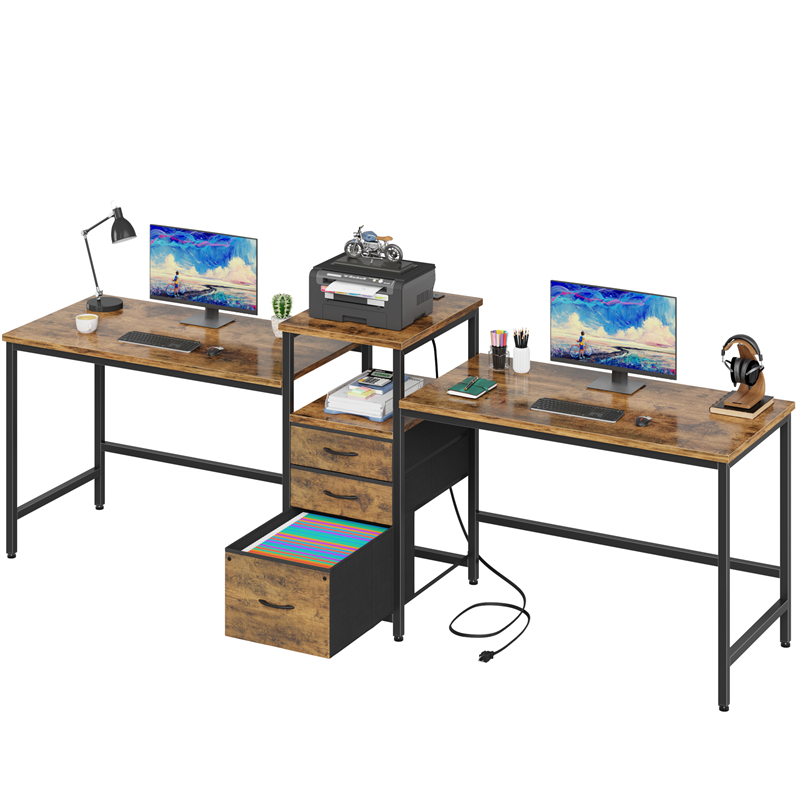
What the D2007 Double Table Listing Confirms, and What It Leaves Open
The catalogue entry for the D2007 Double Table in Tiger Wood supplies a model name, a colour reference and product images. It does not state a tabletop height, the clear height underneath, the footprint, the material or a load rating. That matters because every desk-and-chair fit question depends on numbers the entry does not currently give.
Two parts of the name also deserve care. Tiger Wood is a colour or finish reference, not evidence that the table is solid tigerwood, and Double Table does not explain whether it means two tiers, two pedestals or two paired units. Ask the seller both questions before comparing chairs.
Measure the Chair First
Sit in the chair you plan to use and measure four things: the seat height from the floor, the height of the armrests above the floor, the width across the widest point of the arms or back, and the footprint of the legs or base including any splay. If the chair swivels, note how far the base reaches when it turns. Measuring while seated, in your normal posture, keeps the figures honest, because a chair measured empty often reads differently.
Those four numbers answer three later questions: how much clear height the chair needs under the table, how much open width the table must offer between its legs, and how far the chair travels when you pull it out or turn. If you do not own the chair yet, take the figures from the chair's own published specification rather than estimating from a photograph, and treat them as claims to verify.
Measure the Underside of the Table, Not Just Its Top
For the D2007, the figures to request are the height of the tabletop, the clear height from the floor to the lowest obstruction, the open width between the front legs, and the depth from the front edge back to any rear leg, brace or lower tier. The lowest obstruction is the one that decides whether a chair tucks in. A drawer box, apron or second tier that hangs lower than the tabletop edge will stop the chair sooner, which pushes you further from the work surface.
The Chair Tuck Test
Compare the two sets of figures directly. The chair's arm height against the underside of the tabletop tells you whether the chair can slide in at all. The chair's width against the open span between the table's legs tells you whether it fits without being angled. The seat height against the clear height under the table tells you whether it slides under cleanly or only partly.
Suppose, as a hypothetical example, that a chair's arms sit just above the underside of the tabletop. The chair may still work if you sit slightly angled, but you would lose the tuck and your forearms would carry more weight. The same logic applies to any lower tier on a double table: confirm what the lower level is before assuming a chair can pass under it.
Reach and Working Posture
Fit is not only about sliding in. Once the chair is under the table, check where your hands land and whether your forearms can rest on the surface while your shoulders stay relaxed and your feet reach the floor or a footrest. That judgment needs the actual tabletop height. Without it, you can see that a chair fits under a table but not that the pair is comfortable to work at.
If the table height is unknown, the honest position is that the pairing is unverified. Ask for the measurement rather than estimating from a photograph, since camera angle and cropping make height almost impossible to judge by eye.
Leave Space for the Chair to Move
A desk and chair also need room around them. Measure from the front edge of the table to the nearest wall, bed or cabinet, then mark the space the chair occupies when pulled out and when someone stands up. Reversing a chair out of a tight corner is the most common reason a technically compatible pair still feels awkward.
If the table doubles as a shared surface, add the space needed for a second person to sit opposite or beside you. Walkway widths are a separate planning decision, so measure the routes you actually use rather than applying one figure to every room.
A Checklist to Send Before You Order
Ask the seller for the height of the D2007 tabletop, the clear height beneath it, the open width between the legs, the full footprint, and confirmation of what the material and finish are. Add one question about what Double Table refers to in this model, because a second tier, a second pedestal or a paired unit each change the knee space.
Then check your own side: the chair's seat and arm heights, its width, its base footprint, and the space it needs to pull out. Write both sets of figures in one place, in the same units.
If any figure is missing, mark the pairing as unconfirmed. A tape measure and a short reply from the seller are cheaper than a table no chair can sit under.
What to Do Next
When the figures arrive, test the arrangement before committing. Mark the table footprint and the chair's pull-out zone on the floor with tape or a cardboard outline, then walk the route and sit at that depth. This will not confirm comfort, but it will expose a space that is too tight.
If the measurements are not available, the practical choice is between accepting that the D2007's fit with your chair is unknown, or choosing a table whose dimensions are published. Either is a reasonable decision; treating an unmeasured pairing as certain is not.
Explore related furniture
D2007- Double Table Tiger Wood
Related questions
Can I judge desk and chair fit from product photos?
No. Photos show shape, colour and general proportions, but they rarely show the underside height, the apron depth or the open span between the legs, which are the figures that decide whether a chair tucks in. Use photos to shortlist, then ask for measurements in millimetres or inches and compare them with your chair's own figures before ordering.
Does Tiger Wood mean the D2007 is solid wood?
The catalogue entry lists Tiger Wood as part of the product name and colour reference, and it does not state the material or construction. A colour or finish name is not evidence of solid wood, veneer or any other build. Ask the seller to confirm the material, finish and care requirements directly, and check any written specification supplied with the product.
What if the seller cannot provide measurements?
Then the fit between the D2007 and your chair stays unverified, and that is the useful conclusion rather than a reason to guess. You can still buy the table, but accept that the chair may not tuck in as you hoped. If tucking a chair under the table matters, compare tables whose tabletop height and clear underside are published before deciding.