What Makes a Filing Label Easier to Maintain?
A filing label is easier to maintain when its meaning survives a change of user, a split category and a replacement label, and that depends more on the written identifier than on whether colour is present. A label that needs a verbal explanation is already fragile, because the next person to open the drawer may not have heard it. Test the exact wording at final size in the drawer's real light before ordering a full set.
The maintenance test is not how quickly one person recognises a colour. It is whether a replacement label can be matched, whether an unfamiliar user can read the contents, and whether a new category can be added without redesigning the whole scheme. If those tasks are easy, the system survives everyday filing; if they depend on memory, it does not.
When Does Colour Improve Filing Speed?
Colour improves filing speed only when the categories are stable, every user knows the same key and each label still carries text that names the contents. Colour helps the eye group folders before reading, while the text resolves the ambiguity. In a shared cabinet, post the key where filers work, use the same colour order on every drawer, and test the palette in the light where the drawer is opened.
The trade-off is maintenance. A colour scheme needs a key, a rule for new categories and a supply of replacement labels in matching shades. If those tasks are not assigned, colour becomes decoration and the text label has to do all the work anyway.
Where Plain Text Labels Reduce Upkeep
Plain text labels reduce upkeep when the cabinet is shared, categories change, or a replacement label must stand alone without a colour legend. They are slower to scan than a strong colour block, so the trade-off is reading effort against independence. A consistent naming pattern such as owner, year and document type is more maintainable than a clever abbreviation that only its creator understands.
Check the wording from the position where you file, not from a screen at close range. If the label cannot be read without leaning into the drawer, shorten the text or move the label to a more visible position on the folder.
How Should a Colour Key Be Kept With the Cabinet?
A colour key kept with the filing cabinet is what turns colour into a usable secondary cue; without it, colour is only decoration and every new user has to ask what the shades mean. The key should name each colour, state the category in words and record the date or owner of the scheme. Keep it in the drawer or attached where a filer can see it without searching elsewhere.
A key adds maintenance because it must be updated whenever a category splits, a colour is retired or a replacement label looks different. That cost is worth paying only if colour genuinely speeds a repeated task. If the drawer is opened occasionally or by one person, plain text is usually the lighter system to keep accurate.
What Should You Confirm About the FC013 Before Printing Labels?
The FC013 listing supports only three product facts: model FC013, a filing cabinet listed with a lock, and a Tiger Wood colour designation. It does not state drawer count, internal dimensions, file format, rail support, which compartments lock, material or a security rating. Before printing labels, ask the seller for the drawer interior width, depth and height, the folder format the drawers accept and the label or tab clearance.
Tiger Wood is a colour description, not evidence of solid wood, and a lock is not a security rating. If labels are part of a confidential filing routine, confirm which compartment the lock covers and whether the seller documents any additional protection. Those are separate questions from whether a text or colour label system is easier to maintain.
How Do You Change Label Systems Without Creating Misfiles?
Changing from colour-only tabs to text labels creates the fewest misfiles when one drawer is converted at a time and both old and new identifiers stay visible until every folder in that drawer has been re-sorted. Update the key on the same day, tell everyone who files, and remove the old label only after the new one is in place.
Do not combine two systems indefinitely. A folder with an old colour and a new text label can be read two ways, which is the ambiguity a maintainable system should remove. Finish one drawer before starting the next, and check the first replacement labels in the cabinet's actual light before printing the rest.
Explore related furniture
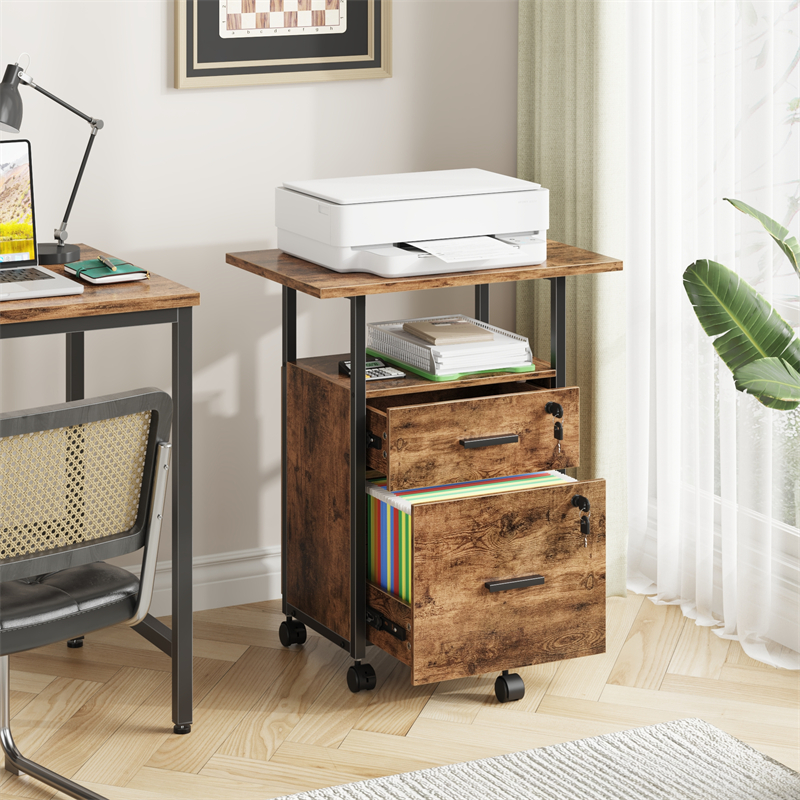
FC013 Locking Filing Cabinet — Tiger Wood Colour
Who this helps
You are setting up the FC013 in a home office shared by two people and want new folders to be filed correctly without a verbal handover. You have not confirmed the cabinet's drawer dimensions, file format or which compartments lock.
How to make the choice
Choose plain text as the primary identifier when more than one person files, categories may split or the drawer light is uncertain; choose a colour accent only when it adds a secondary grouping cue and a key stays with the cabinet. Choose colour-only labels for a stable personal system only if every user can distinguish the colours and you accept the key and replacement work. Confirm drawer and folder fit with the seller before printing a large set.
Information behind this guide
The FC013 listing confirms the model, a lock and a Tiger Wood colour designation. It does not confirm drawer count, internal dimensions, file format, rail support, which compartment locks, material or any security rating. The legibility and maintenance guidance here is general editorial advice, not a test of this cabinet or of any label product.
Compare your options
| Option | Consider when | Limitation | What to verify |
|---|---|---|---|
| Colour-only labels | A stable personal filing system where the user already knows the key and the drawer light is consistent. | Colour is the only identifier, so a new user, a replacement label or a changed category can make the drawer ambiguous. | Test the palette in the actual drawer light and add text if more than one person files. |
| Plain text labels | Shared filing, changing categories or anyone who needs to read a label without learning a colour code. | Slower to scan than a colour block and needs enough visible label space for readable words. | Print at final size and read the wording from the usual filing position before ordering a set. |
| Text plus colour accent | A shared drawer where quick visual grouping helps but every folder must still identify itself in words. | Adds a second decision per label and needs a key for the accent colour; mismatched accents can mislead. | Keep the text as the primary identifier and confirm the accent still helps after replacements. |
Your decision checklist
- Write the exact label text and colour key before printing a full set, then read both from the position where you normally file.
- Test one label at final size on the intended folder tab or drawer front in the cabinet's real light.
- Keep the colour key with the cabinet and include the date and owner so a replacement label can be matched without asking.
- Decide how split categories will be relabelled and update the key on the same day rather than leaving two systems in use.
- Ask the seller for FC013 drawer interior dimensions, accepted file format and which compartments lock; the listing does not provide them.
Related questions
Can colour alone identify files if everyone knows the system?
Colour alone is not a maintainable identifier for a shared filing cabinet, even when the current users know the key. A replacement label, a new user or a category change can break the code, and not everyone perceives colours in the same way. Keep text on every label and use colour only as an additional grouping cue; the label should still make sense if the colour is ignored.
How do I test label legibility in the FC013 before printing a full set?
Print one label at the final size on the intended stock, place it where it will sit on the folder or drawer front, and read it from the position you normally use when filing. Check the actual light in the cabinet, the abbreviations you plan to use and whether a second person can read the same text without explanation. Ask the seller for drawer interior and label clearance first, because the FC013 listing gives no dimensions.
Does the FC013 lock make it suitable for confidential files?
The listing says the filing cabinet is listed with a lock, but it does not identify which compartment locks, the lock type or any security, fire or water-resistance rating. Ask the seller those questions and keep the answer separate from the label-system decision. A lock can be useful as part of access control, but it does not by itself establish the level of protection the cabinet provides.